
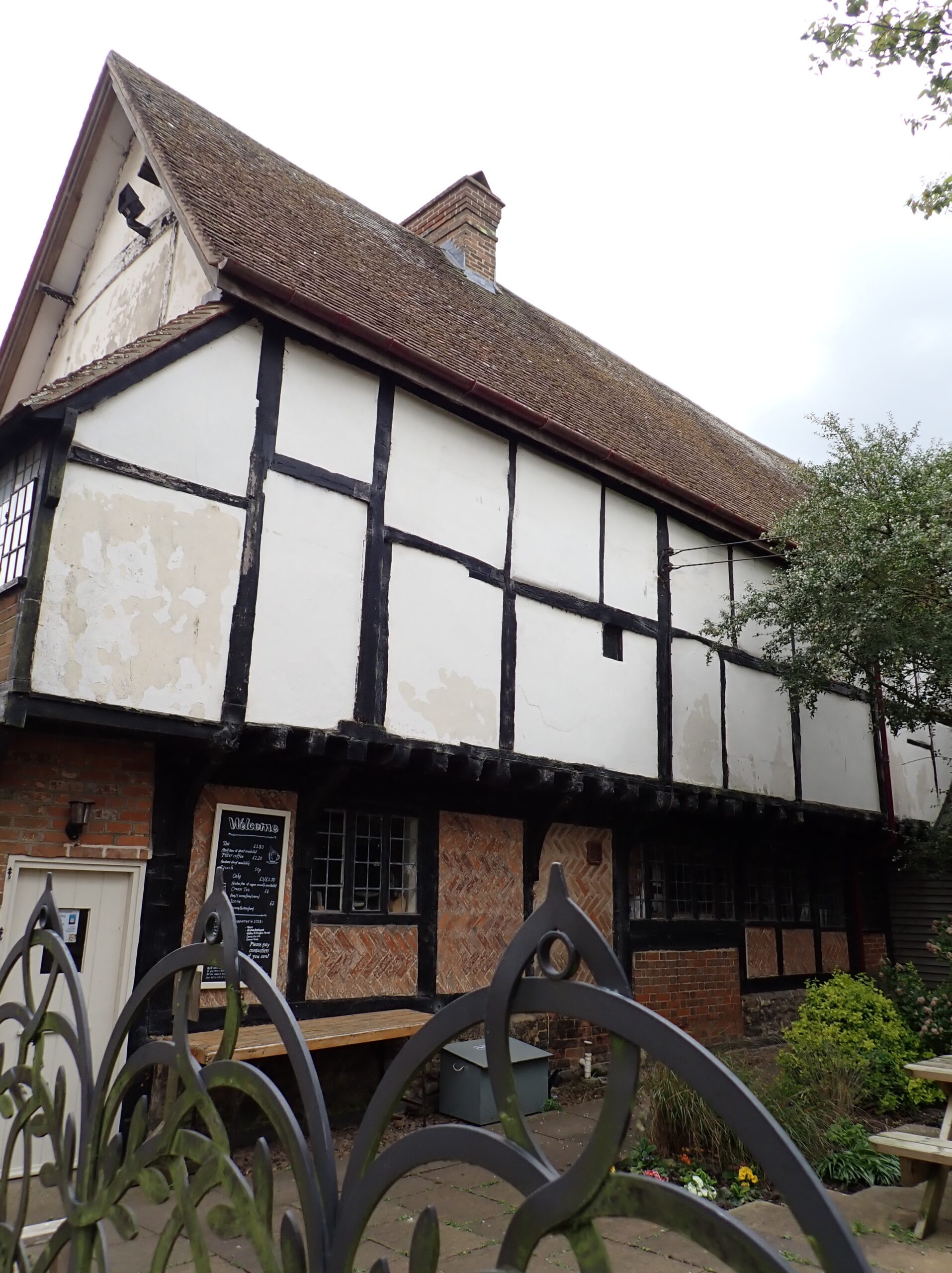


The Museum is housed in an historic building – known today as the Abbey Guest House – with a very rich background of its own.
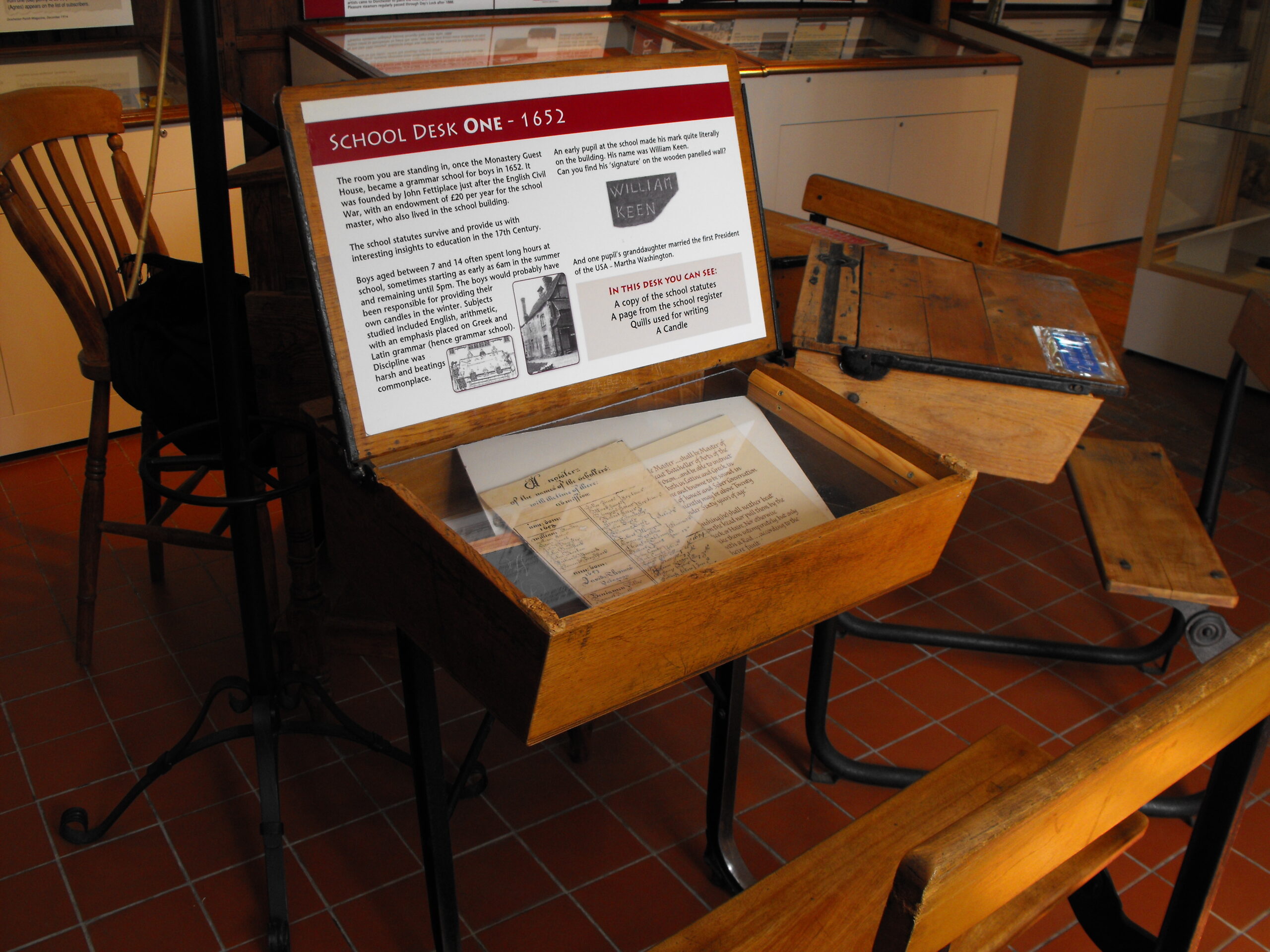
The building was part of Dorchester Abbey before the Dissolution of the Monasteries in 1536, and from 1544 was the family home of the Ashfields of Ewelme, who had purchased the Abbey site. In 1652 John Fettiplace, from Swinbrook near Burford, set it up as a grammar school. He pledged a commitment to pay for a schoolmaster and created a 15-page set of rules. One of the first of its 20 pupils was a William Keen, possibly the same William who left his initials carved into the panelling. From 1801 the building housed a private boarding school, which by 1831 had 50 pupils. From 1858-1896 it was Dorchester National Boys’ School, while some residents remember its brief revival as a school after WW2.
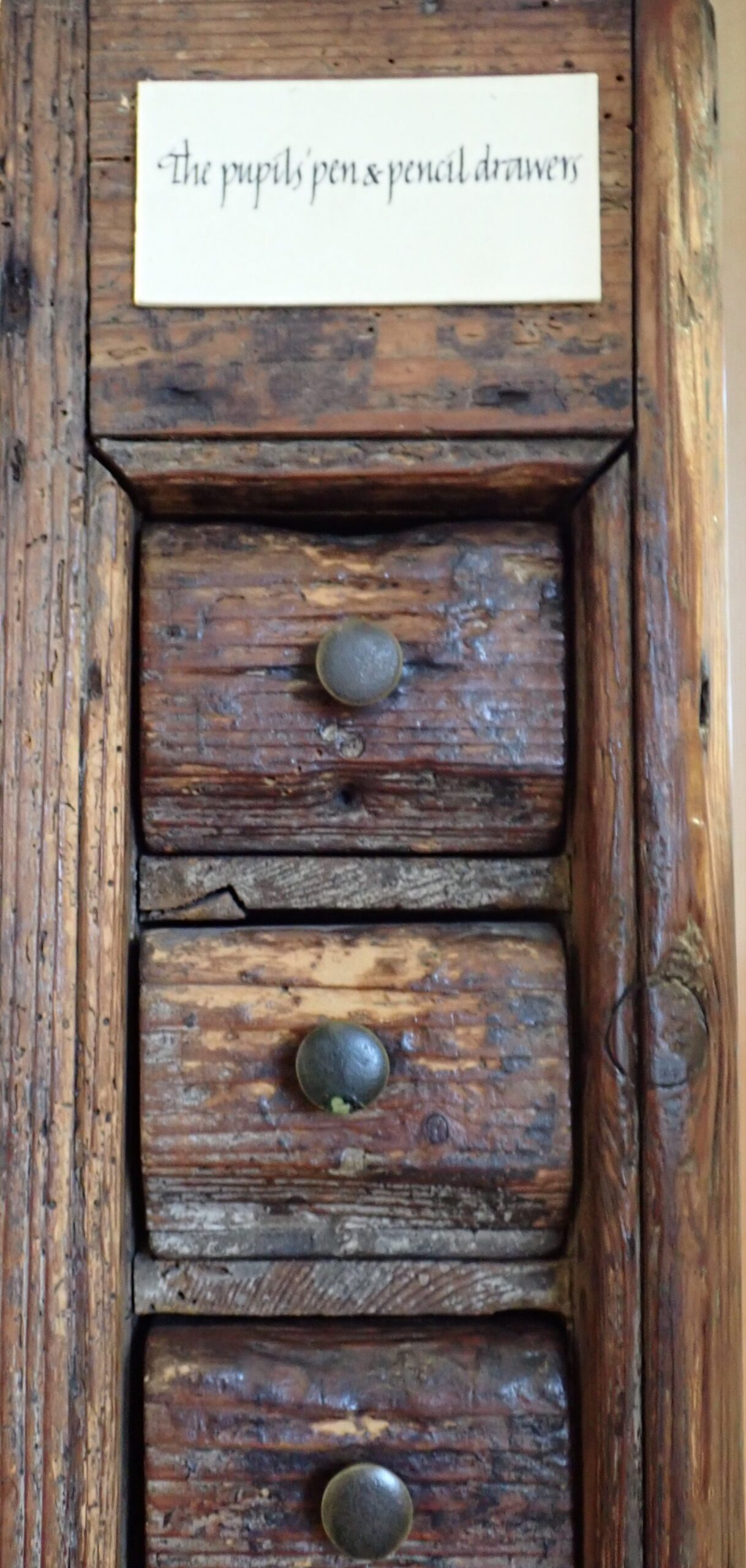
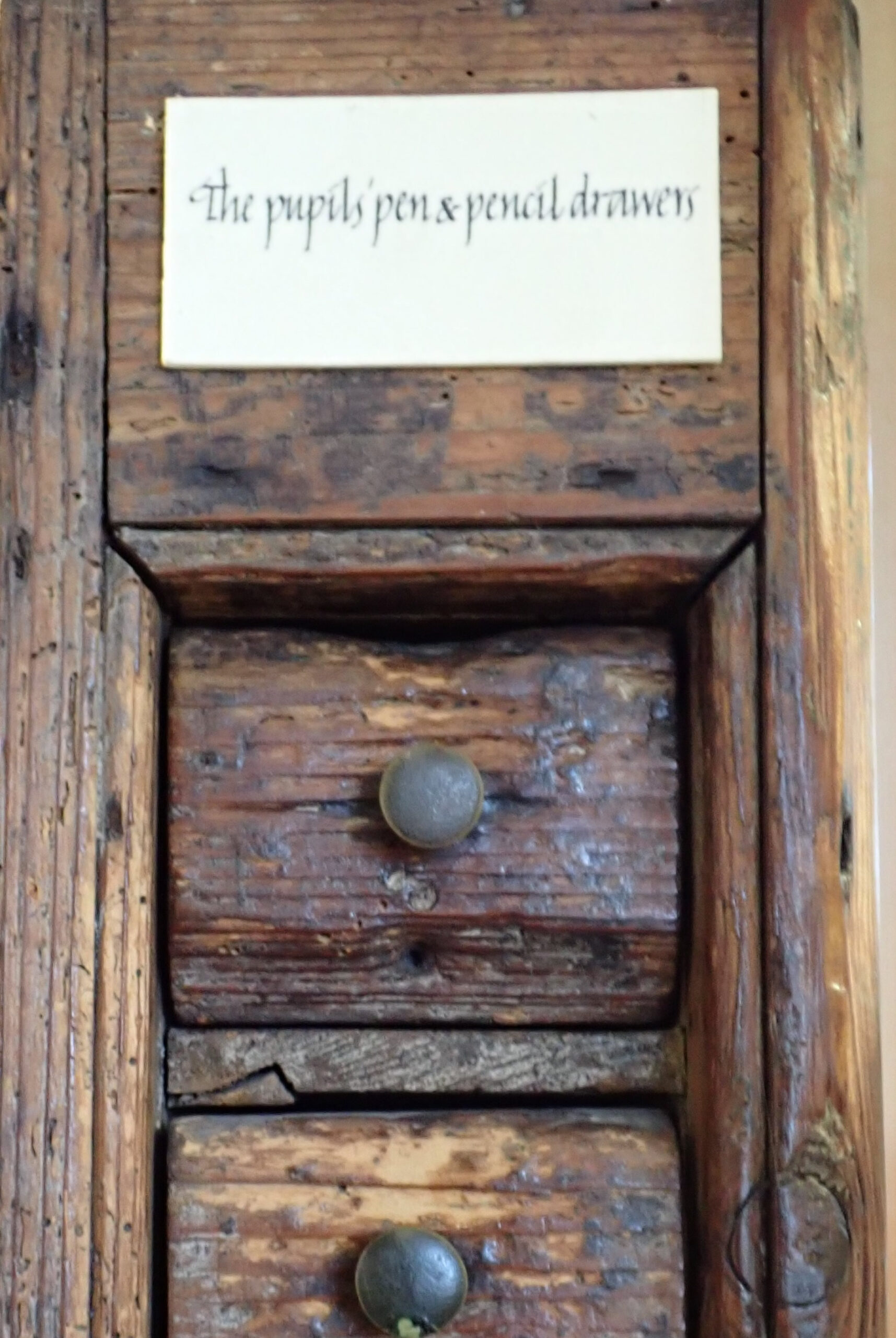
Today, we still have a copy of the school register from the 1600s, a set of small drawers for pencils set into a pillar, and the old bell, originally on the roof.
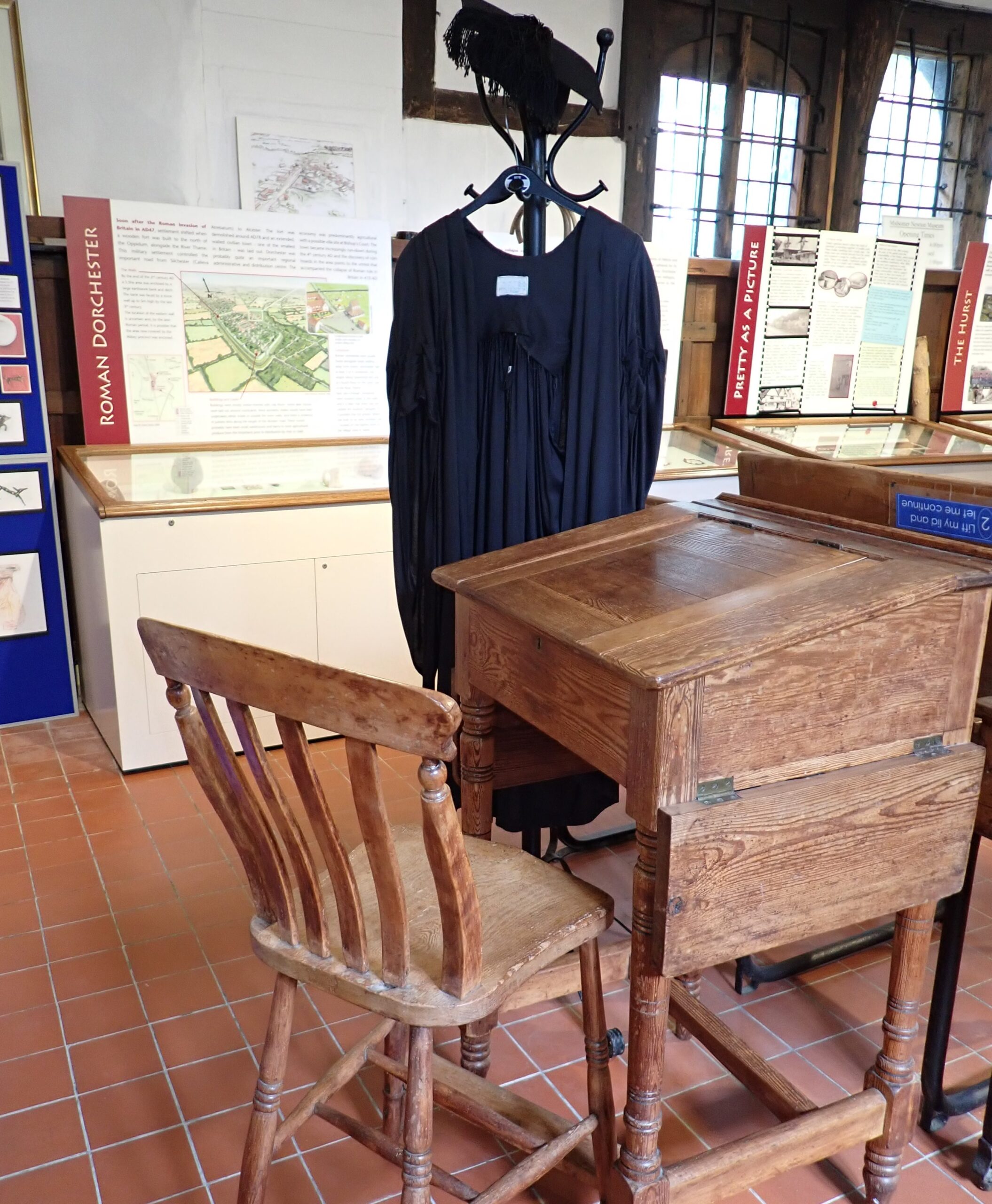
In 1960 part of the ground-floor was turned into a museum by Edith Stedman. It comprises one ground floor room with panelled walls and leaded windows, and a seat where monks used to hand out food to locals in need. The room is now set out as an old-fashioned school room, with desks as display cases.
In recent times the Museum, the Abbey and Dorchester featured in several episodes of Midsomer Murders.
The Museum also has a small but well-stocked shop, the wonderful (and renowned) Dorchester Abbey Tea Room and garden share the ground floor, while the Guest House as a whole can be hired out for private events.
The Museum is housed in an historic building – known today as the Abbey Guest House – with a very rich background of its own.
The building was part of Dorchester Abbey before the Dissolution of the monasteries in 1535, and from 1544 was the family home of the Ashfields of Ewelme, who had purchased the Abbey site. In 1652 John Fettiplace, from Swinbrook near Burford, set it up as a grammar school. He pledged a commitment to pay for a schoolmaster and created a 15-page set of rules. One of the first of its 20 pupils was a William Keen, possibly the same William who left his initials carved into the panelling. From 1801 the building housed a private boarding school, which by 1831 had 50 pupils. From 1858-1896 it was Dorchester National Boys’ School, while some residents remember its brief revival as a school after WW2.
Today, we still have a copy of the school register from the 1600s, a set of small drawers for pencils set into a pillar, and the old bell, originally on the roof.
In 1960 part of the ground floor was turned into a museum by Edith Stedman. It comprises one ground floor room with panelled walls and leaded windows, and a seat where monks used to hand out food to locals in need. The room is now set out as an old-fashioned school room with desks as display cases.
In recent times the museum, the Abbey and Dorchester featured in several episodes of Midsomer Murders.
The museum also has a small but well-stocked shop, the wonderful (and renowned) Dorchester Abbey Tearoom and garden share the ground floor, while the guest house as a whole can be hired out for private events.